Why combine the POIs?

More value

A single Juliet’s House ticket is inexpensive, but the math changes fast once you add the Arena and other museums. The Verona Card usually becomes the cheaper option after 2–3 major stops.

Simpler planning

Instead of buying separate admissions across the day, you manage one pass and one Juliet’s House reservation. That cuts down checkout steps, ticket juggling, and last-minute decisions in the center.

City-center flow

Juliet’s House sits close to Piazza delle Erbe, Torre dei Lamberti, and the Arena. The Verona Card works best here because you can cover several included sights on foot without losing time.

More than one photo

Juliet’s House is memorable, but brief. Pairing it with the Verona Card turns a 30–45 minute literary stop into a fuller Verona day with Roman history, museums, and viewpoints.

The best ways to explore both

AspectSeparate ticketsVerona Card combo

Cost

Juliet’s House is about €6. Add the Arena and another museum, and you usually pass €20.

24-hour card €20; 48-hour card €25. Best value once Juliet’s House is part of a fuller sightseeing plan.

Availability

You still need a Juliet’s House timed slot and separate purchases elsewhere.

You still reserve Juliet’s House, but the rest of the day needs fewer separate transactions.

Timeslots

You coordinate every paid stop yourself.

The card starts on first use, so timing is tighter, but easier to manage.

Convenience

Multiple bookings and confirmations.

One pass, one activation, and broader coverage.

Flexibility

Best if Juliet’s House is your only paid visit.

Best when you’re sightseeing in a compact 24–48 hour block.

Best for

Visitors seeing one or two paid attractions at an easy pace.

Visitors fitting Juliet’s House, the Arena, and museums into 1–2 days.

Making the most of your experience

  • Plan your day: Spend 30–45 minutes at Juliet’s House, then walk to the Arena, Torre dei Lamberti, or Teatro Romano. A strong 24-hour card day takes 5–7 hours.
  • Upgrade smartly: Pair the card with a timed Juliet’s House slot and, if you want more context, add a guided walking tour or digital audio guide.
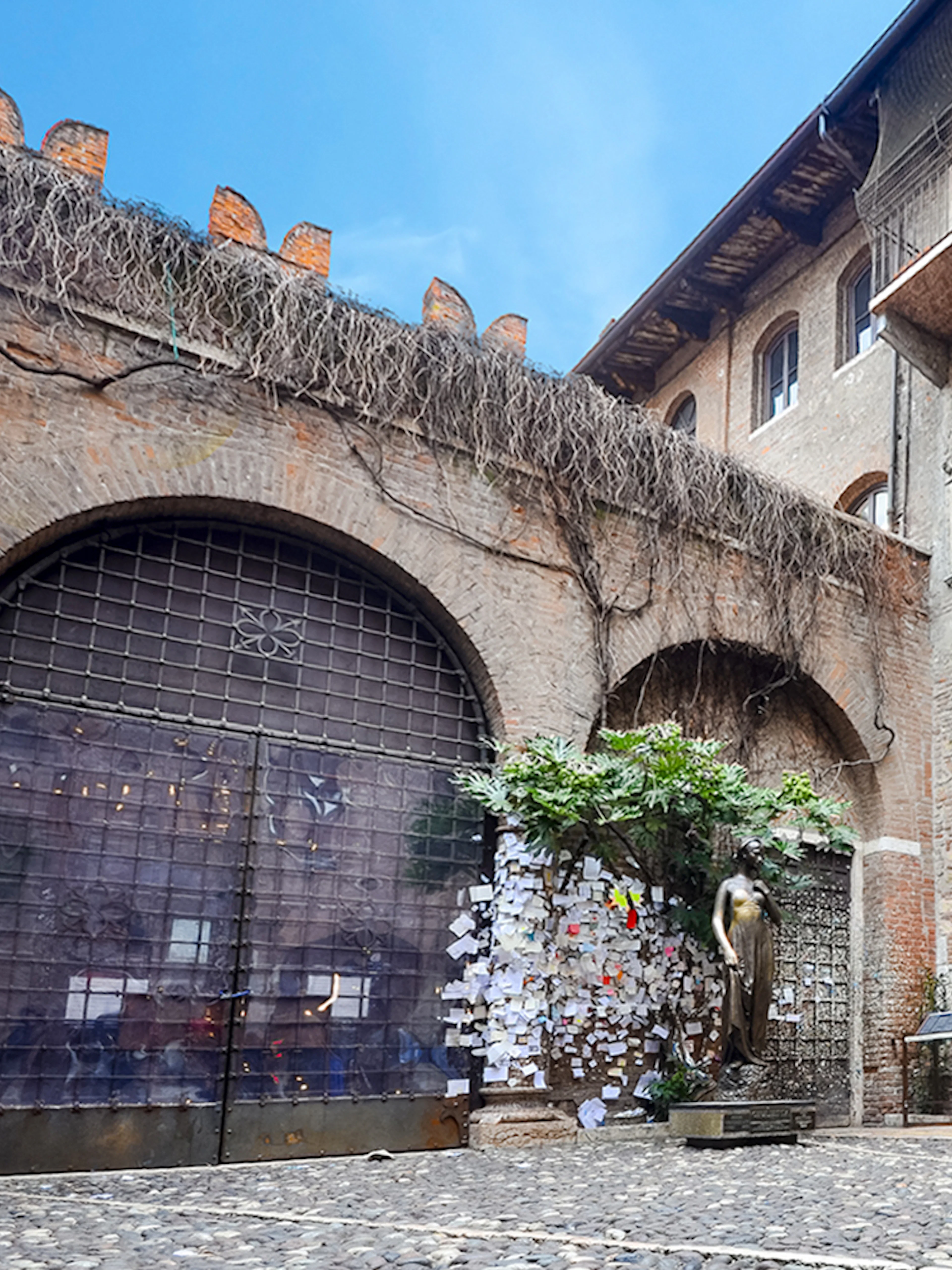
  • What you cover: Balcony access, museum rooms, the bronze statue courtyard, and easy add-ons like the Arena, city museums, and bus rides once the card activates.
  • Juliet’s House: Usually Monday 1:30pm–7:30pm, and Tuesday–Sunday 9am–7pm. Last entry is typically 30 minutes before closing.
  • Verona Card: Choose 24-hour or 48-hour validity; the countdown starts at first use, not at purchase.
  • Start with Juliet’s House: An early slot leaves the rest of your card window free for the Arena and nearby museums.
  • Crowd rhythm: Late morning to mid-afternoon is when tour groups and day-trippers pack the courtyard most heavily.
  • Best timing strategy: Early morning is strongest for balcony photos. In summer, late afternoon also works well if you want cooler streets afterward.
  • City context: Juliet’s House sits inside Verona’s compact historic center, and the Verona Card works best when you stack nearby included sights into one walkable route.
  • Juliet’s House: [Via Cappello, 23, 37121 Verona VR, Italy] | Find on Maps
  • Verona Card pickup/activation area: [Piazza Bra, Verona, Italy] | Find on Maps
  • Getting between sights: Walk 2 minutes to Piazza delle Erbe, 5 minutes to Torre dei Lamberti, and about 10 minutes to the Arena. From Porta Nuova station, buses 73, 96, and 97 reach the Piazza Bra area.
  • Parking: Via Cappello lies inside Verona’s ZTL, so driving directly there isn’t practical. Use edge-of-center parking near Piazza Isolo or Piazza Bra, then walk into the old town.
  • Juliet’s House: The courtyard is accessible at street level, but the museum rooms and balcony require stairs; there’s no elevator to the upper floors.
  • Verona Card: The pass itself has no physical barrier, but accessibility depends on each included attraction’s layout and entry rules.
  • Mobility planning: If stairs are an issue, use the card for more accessible Verona sights and treat Juliet’s House mainly as a courtyard stop.
  • Sensory note: First-entry slots are usually calmer; the courtyard gets louder and tighter by late morning.
  • Activate late, not early: If Juliet’s House is your only first stop, wait to activate the card until you’re ready for the Arena or museums too.
  • Book the House first: The card improves value, but Juliet’s House still runs on timed admission during busier periods.
  • Use the neighborhood well: Piazza delle Erbe, Torre dei Lamberti, and Romeo’s House are close enough to build a compact walking block.
  • Expect crowding below: Even with a reservation, the courtyard feels busiest from late morning through mid-afternoon.
  • Keep the QR code ready: Staff may check your Juliet’s House booking separately from the pass activation.
  • Rain can help: Save Juliet’s House for showers, then use clearer weather for bridges, squares, and tower views.
  • Skip bulky bags: Tight staircases and small museum rooms make large backpacks more awkward here than at Verona’s bigger sites.

Frequently asked questions

You can do both separately, but the card makes more sense if Juliet’s House is one stop in a fuller Verona day with other paid sights.

More reads

Juliet’s House guide

Verona Card guide

Verona Arena guide

Juliet’s Tomb guide