Verona Tickets

Juliet's House visitor guide

Juliet's House is a small medieval townhouse museum best known for the balcony, courtyard, and love-story rituals tied to Shakespeare's Romeo and Juliet. The visit is short, but the site feels much busier than its size suggests, especially once tour groups arrive and the courtyard bottlenecks. The biggest difference between a pleasant stop and a frustrating one is choosing the right time slot and deciding in advance whether the courtyard is enough or you want to go inside. This guide covers timing, entry choices, layout, and what to expect on the day.

Quick overview: Juliet's House at a glance

If you want the romance without the confusion, make these decisions first.

  • When to visit: Monday 1:30pm–7:30pm; Tuesday–Sunday 8:30am–7:30pm. The first slot of the day or the final hour is noticeably calmer than late morning to mid-afternoon, because the courtyard is tiny and tour groups stack up fast.
  • Getting in: From EUR 6 for standard entry. Verona Card entry is included with a reserved slot. Advance booking matters most on weekends, holidays, Valentine's period, and April–September, while quieter winter weekdays are far more flexible.
  • How long to allow: 30–45 min for most visitors. It stretches closer to 1 hour if you wait for balcony photos, read the museum panels, or visit during a crowded midday window.
  • What most people miss: The Zeffirelli film bed and costumes, plus the Capello family details inside, add more context than the balcony alone.
  • Is a guide worth it? A guide is most useful if you want the myth-vs-history story and broader Verona context; for a short standalone visit, a good audio guide usually does the job for less.

Jump to what you need

🕒 Where and when to go

Hours, directions, entrances, and the best time to arrive

🗓️ How much time do you need?

Visit lengths, suggested routes, and how to plan around your time

🎟️ Which ticket is right for you?

Compare all entry options, tours, and special experiences

🗺️ Getting around

How the house and museum rooms are laid out and the route that makes most sense

🎭 What to see

Balcony, bronze statue, and Zeffirelli film props

♿ Facilities and accessibility

Bag check, accessibility limits, and family guidance

Where and when to go

How do you get to Juliet's House?

Juliet's House sits on Via Cappello in Verona's historic center, a short walk from Piazza delle Erbe and about 10 minutes on foot from the Arena.

Via Cappello, 23, 37121 Verona VR, Italy

→ Open in Google Maps

  • Walk: From Piazza delle Erbe → 2 min → easiest approach if you're already sightseeing in the historic center.
  • Walk: From Piazza Bra/Arena → 10 min → follow Via Mazzini, then turn onto Via Cappello.
  • Bus: From Verona Porta Nuova, lines 73, 96, or 97 toward the center → get off near Piazza Bra → walk about 10 min.
  • Taxi/rideshare: Drop-off near Piazza Bra or Ponte Navi → final approach is on foot because Via Cappello is in the pedestrian center.
  • Drive: Use a central garage such as the Piazza Isolo area → walk about 5–10 min → don't plan to drive directly to the entrance because of the ZTL.

Full getting there guide

Which entrance should you use?

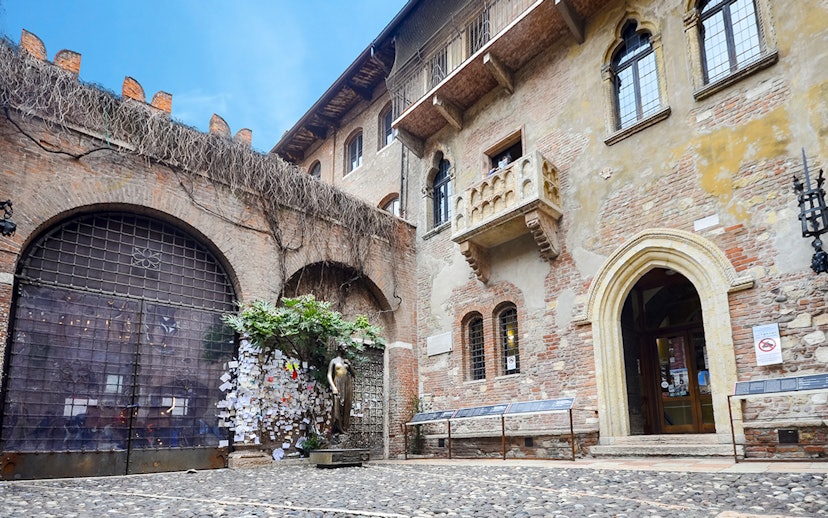
There is one main entrance through the archway off Via Cappello, but timed-entry visitors still get slowed down when the courtyard fills and people stop for statue and balcony photos.

  • Timed-entry tickets: For visitors with a QR code reservation. Expect 5–15 min wait outside busy midday slots.
  • Verona Card reservations: For pass holders with a booked slot. Expect a shorter check-in, but you still need the reserved time.
  • Courtyard access: For visitors who only want the exterior view when access is open. Expect the heaviest crowding from late morning onward.

Full entrances guide

When is Juliet's House open?

  • Monday: 1:30pm–7:30pm
  • Tuesday–Sunday: 8:30am–7:30pm
  • Last entry: 7pm

When is it busiest? Saturdays, Sundays, holidays, and late morning to 4pm from April through September are the hardest windows, because the courtyard is tiny and photo queues build quickly.

When should you actually go? Book the first Tuesday–Thursday slot or arrive in the final hour if you want easier balcony photos, shorter waits, and more room to read the museum displays.

Which Juliet's House ticket is best for you

Ticket typeWhat's includedBest forPrice range

Courtyard access

Exterior courtyard view + balcony view from below + bronze statue + letter wall

A quick stop when you mainly want the atmosphere and photo ops without committing to the museum visit

From EUR 0

Juliet's House entry ticket

Timed museum entry + balcony access + interior rooms + film props and exhibits

A short visit where you want to stand on the balcony and see more than the courtyard crowd sees

From EUR 6

Verona Card

Juliet's House entry with reserved slot + Arena + other Verona museums and attractions + city bus access

A sightseeing day where you're visiting at least 2–3 paid Verona attractions and want better overall value

From EUR 20

Guided walking tour that includes Juliet's House

City walking route + guide commentary + Juliet's House stop or entry depending on the tour format

A first Verona visit where you want the myth, history, and city context explained without piecing it together yourself

From EUR 20

Which Juliet's House ticket is best for you

Ticket typeWhat's includedBest forPrice range

Courtyard access

Exterior courtyard view + balcony view from below + bronze statue + letter wall

A quick stop when you mainly want the atmosphere and photo ops without committing to the museum visit

From EUR 0

Juliet's House entry ticket

Timed museum entry + balcony access + interior rooms + film props and exhibits

A short visit where you want to stand on the balcony and see more than the courtyard crowd sees

From EUR 6

Verona Card

Juliet's House entry with reserved slot + Arena + other Verona museums and attractions + city bus access

A sightseeing day where you're visiting at least 2–3 paid Verona attractions and want better overall value

From EUR 20

Guided walking tour that includes Juliet's House

City walking route + guide commentary + Juliet's House stop or entry depending on the tour format

A first Verona visit where you want the myth, history, and city context explained without piecing it together yourself

From EUR 20

How do you get around Juliet's House?

Layout and route

Juliet's House is compact and mostly linear, so the visit is easy to follow once you're inside, but the narrow rooms and staircase make it feel tighter than most visitors expect.

The layout is simple in practice: courtyard first, then the museum rooms, then the balcony, so the main challenge is crowd flow rather than navigation.

  • Courtyard: Bronze Juliet statue, balcony view, and love-note archway → budget 10–15 min.
  • Lower rooms: Introductory displays and historic context about the house and Capello link → budget 5–10 min.
  • Upper rooms: Furnished spaces, film props, and balcony access → budget 10–15 min.
  • Balcony stop: Quick photo moment overlooking the courtyard → budget 5 min, longer if it's crowded.

Suggested route: Do your courtyard photos first if it's quiet, then go inside and leave the balcony for the end so you don't backtrack down the staircase through oncoming visitors.

Maps and navigation tools

  • Map: There is no large site map to study in advance because the museum is small; check the room sequence on arrival and keep your phone free for tickets and photos.
  • Signage: Wayfinding is basic but enough because the route is short, though crowding can make the flow feel less obvious on the staircase.
  • Audio guide / app: Audio guide options add the most value for the myth-versus-history story and the Zeffirelli film links, rather than for navigation itself.

💡 Pro tip: Finish the courtyard photos before you start climbing the interior stairs, because coming back down into the crowd usually feels slower than visitors expect.

Get the Juliet's House map / audio guide

Where are the masterpieces inside Juliet's House?

Juliet's House balcony
1/5

Balcony

Attribute — Literary landmark: Shakespeare-inspired balcony

The balcony is the reason most people come, even though the version you see today was added in the 20th century rather than the medieval period. The appeal is less about authenticity and more about the ritual of stepping into the most famous scene in the story. What most visitors rush past is the view back into the courtyard - it's the one moment that makes the crowd below feel theatrical rather than chaotic.

Where to find it: At the end of the upper-floor route, opening directly off the interior rooms.

Bronze statue of Juliet

Attribute — Courtyard icon: Bronze sculpture and luck ritual

The bronze Juliet statue is the courtyard focal point, and the long-standing ritual is to touch her for luck in love. Most visitors know the photo pose, but fewer notice how polished the metal has become from constant touching, which tells you more about the site's global popularity than any panel inside. This is also where queues build fastest once the courtyard fills.

Where to find it: Center of the courtyard, directly below the balcony.

Juliet wall and letter tradition

Attribute — Visitor ritual: Love notes and letters to Juliet

The archway and courtyard traditions are part of what makes this stop feel alive rather than purely museum-like. People still come here to leave messages, initials, and letters tied to the long-running 'letters to Juliet' tradition. What most visitors miss is that the official red letterbox matters more than the graffiti-like wall habits - that's the route connected to the volunteer replies.

Where to find it: In the entrance archway and courtyard area before you enter the museum rooms.

Zeffirelli film bed and costumes

Attribute — Film connection: Props from Romeo and Juliet (1968)

The Zeffirelli room is one of the strongest reasons to go inside rather than stop in the courtyard. The bed and costumes give the museum a cinematic layer that makes the site feel less like a single-photo stop and more like a place shaped by decades of cultural storytelling. Many visitors head straight for the balcony and barely pause here, which is a mistake.

Where to find it: In the museum rooms inside the house, before the balcony exit point.

Capello family details and museum rooms

Attribute — Historical context: Medieval house and civic collection pieces

The interiors help explain why this house, rather than another medieval building, became tied to the Capulets in Verona's imagination. The Capello family references, period furnishings, and civic artifacts matter because they give the myth a local frame. Most visitors overlook the carved family crest and treat the visit as pure fiction, when the city's historical layering is part of the appeal.

Where to find it: Throughout the museum rooms, with the Capello crest above the entrance archway.

Facilities and accessibility

  • 🎒 Bag check: Large bags and bulky backpacks may be restricted, so travel light and expect staff to stop oversize items at entry.
  • 🛍️ Gift shop / merchandise: An official bookshop/gift area is on-site and is the easiest place to pick up Juliet-themed souvenirs, postcards, and letter-related keepsakes.
  • 🏛️ Courtyard space: The courtyard is the main waiting and photo area, but it is small and fills quickly once group visits overlap.
  • 🪑 Rest pacing: There is no large rest area inside, so this works best as a short stop rather than a long indoor museum session.
  • 📮 Letter drop: The official letterbox is the best way to take part in the letters-to-Juliet tradition without adding to the wall clutter.
  • 🎟️ Timed-entry check-in: Keep your QR code ready on your phone before you reach the doorway, because the entrance flow is quick once your slot is called.
  • ♿ Mobility: The courtyard is accessible at street level, but the museum rooms and balcony require stairs and there is no elevator to the upper floors.
  • 🧠 Cognitive and sensory needs: The calmest window is the first slot or final hour, because the courtyard becomes noisy and compressed once tour groups arrive.
  • 👨‍👩‍👧 Families and strollers: The exterior approach is manageable, but strollers become awkward inside the narrow staircase route and compact rooms.
  • 👁️ Visual impairments: Audio guide options are more useful than the wall labels if you want narration, but the site does not function as a tactile-first experience.
  • 🚶 Crowd flow: Even visitors without mobility concerns can find the interior tight at midday, so low-crowd timing matters more here than at larger museums.

Juliet's House works best for children who enjoy stories, costumes, and quick photo moments rather than long interactive museum visits.

  • 🕐 Time: 20–30 min is realistic with younger children, and the courtyard, statue, and balcony are the parts most likely to keep their attention.
  • 🏠 Facilities: This is a compact heritage site rather than a family attraction, so plan it as a brief stop between larger open-air parts of Verona.
  • 💡 Engagement: Let children spot the balcony first from the courtyard, then challenge them to find the film bed and costumes once you go inside.
  • 🎒 Logistics: Bring only a small bag and avoid arriving with a stroller at peak times, because the staircase and crowding make movement slower than expected.
  • 📍 After your visit: Piazza delle Erbe is a good next stop for space, snacks, and a break from the narrow courtyard.

Rules and restrictions

What you need to know before you go

  • Entry requirement: Book a timed ticket or reserve a Verona Card slot in advance, then have your QR code ready at the entrance.
  • Bag policy: Large bags can be restricted at entry, so a small day bag is the safest option for a quick museum visit.
  • Re-entry policy: Once you exit, your visit is considered finished, so don't plan to step out for a coffee and come back on the same admission.

Not allowed

  • 🚫 Food and drink: Eating and drinking are best kept for before or after the visit, not inside the museum rooms or while moving through the balcony route.
  • 🐾 Pets: The safest assumption is to avoid bringing pets into the museum spaces and to check ahead if you rely on a service animal.
  • 🖐️ Writing on walls: Don't write directly on the archway or walls; use the official letterbox instead if you want to join the Juliet tradition.
  • 🚭 Smoking/vaping: Smoking and vaping don't fit the tight courtyard and indoor heritage setting, so step well away from the entrance area.

Photography

Photos are part of the experience here, and balcony and courtyard shots are generally allowed. Flash-free photography is the safest approach inside the museum rooms, especially around displays and costumes. Tripods, bulky setups, and anything that blocks the narrow route are a poor fit for this space, and the real limit is crowd flow: take your photo, then move on so the next visitor can reach the balcony.

Good to know

  • Balcony pacing: Your balcony moment is brief when it's busy, so decide on your pose and camera settings before you step outside.
  • Statue etiquette: The bronze Juliet photo line moves faster when people take one quick photo instead of treating the courtyard center like a private shoot.

Practical tips

  • Booking and arrival: Book the earliest slot you can on weekends, holidays, and April–September; timed entry keeps the line moving, but arriving late can mean starting your visit in the courtyard crush rather than walking straight in.
  • Pacing: Don't treat the balcony as the whole visit - save 10 min for the Zeffirelli room and the Capello-family context, because that's what makes paid entry feel meaningfully different from a courtyard stop.
  • Crowd management: Tuesday to Thursday at opening is the sweet spot here, because you get the quietest courtyard, the shortest balcony queue, and cleaner photos before tour groups stack up.
  • What to bring or leave behind: Bring only a small bag and have your QR code open before you enter; this is a narrow, stair-based route where bulky bags slow you down and make the museum feel even tighter.
  • Food and drink: Eat before or after, not during; Juliet's House is too short a visit to plan around a meal, and Piazza delle Erbe is a much better place for a sit-down break a few minutes later.
  • Weather: If you're visiting in summer, the courtyard can feel hotter than the rest of the center because you're standing still in a packed enclosed space, so the first or final slot is worth more than usual.
  • Expectations: If you already know the balcony is symbolic rather than original, you're more likely to enjoy the visit for what it is - a compact, theatrical Verona ritual rather than a deep historic house museum.

What else is worth visiting nearby?

Commonly paired: Verona Arena

Distance: 800 m — 10 min walk
Why people combine them: It gives you Verona's two most famous sights in one compact loop - romance first, Roman history second, or the other way around if you want a calmer Juliet's House slot later.
Book / Learn more

Commonly paired: Torre dei Lamberti

Distance: 300 m — 4 min walk
Why people combine them: The tower is a natural follow-up because it opens the visit back out after the tight courtyard and gives you a high, spacious view over the same historic center you just explored on foot.
Book / Learn more

Also nearby

Romeo's House
Distance: 250 m — 3 min walk
Worth knowing: You can only see it from outside, but it's an easy add-on if you want to complete the Romeo-and-Juliet trail without adding much time.

Juliet's Tomb
Distance: 1 km — 15 min walk
Worth knowing: It is quieter and more reflective than Juliet's House, so it's the better second stop if you want less crowding and more atmosphere.

Eat, shop and stay near Juliet's House

  • On-site: There is no full on-site cafe, so Juliet's House works best as a short stop between meals rather than a place to plan lunch around.
  • Via Cappello (1-min walk, Via Cappello): Small cafes and quick stops here are the most practical pre- or post-visit option because they keep you close to your timed entry.
  • Piazza delle Erbe (2-min walk, Piazza delle Erbe): Best for sitting down after the visit, with more choice and more breathing room than the immediate courtyard area.
  • Via Stella (4-min walk, Via Stella): A better fit if you want to move slightly away from the main tourist stream for coffee, aperitivo, or a quieter break.
  • 💡 Pro tip: Don't leave your meal until the busiest midday slot - eat early, visit Juliet's House first, then head to Piazza delle Erbe once the photo-heavy crowd peaks.
  • Juliet's House bookshop: Best for official souvenirs, postcards, and letter-themed keepsakes right after your museum exit.
  • Via Mazzini: Useful if you want broader shopping after the visit, with major retail close enough to fold into the same walking route.

Yes, if you want to walk everywhere in the historic center and don't mind paying more for location. This is the most convenient base for a short Verona stay built around the Arena, Piazza delle Erbe, and Juliet's House. If you want quieter evenings or easier station access, another neighborhood may suit you better.

  • Price point: The historic center skews mid-range to higher, with the biggest premium attached to being able to walk to Verona's main sights.
  • Best for: Short city breaks, first-time visitors, and couples who want the classic Verona experience on foot.
  • Consider instead: Piazza Bra for easier Arena access and a slightly broader hotel choice, or Porta Nuova if you want quicker train connections and lower rates for a longer stay.

Frequently asked questions about visiting Juliet's House

Most visits take 30–45 min. If you only want the courtyard and exterior photos, 10–15 min is usually enough, but a full museum visit with balcony photos and a slower look at the film props can push the stop closer to 1 hour in a busy midday slot.

More reads

Juliet's House tickets

Juliet's House highlights

Getting to Juliet's House

Verona travel guide